
















Co-Adsorption in a MOF for Post-Combustion Capture
Realistic Performance of Carbon Capture Sorbents
Why Co-Adsorption Testing Is Critical
Single-component isotherms provide useful baseline data, but they do not capture the competitive interactions between CO₂ and H₂O that determine performance in practice.
This study demonstrates how advanced gravimetric and breakthrough techniques can be used together to:
- Evaluate sorbents under humid operating conditions
- Identify competitive, cooperative, or non-interacting adsorption behavior
- Define performance limits and regeneration behavior earlier in development
What This Case Study Covers
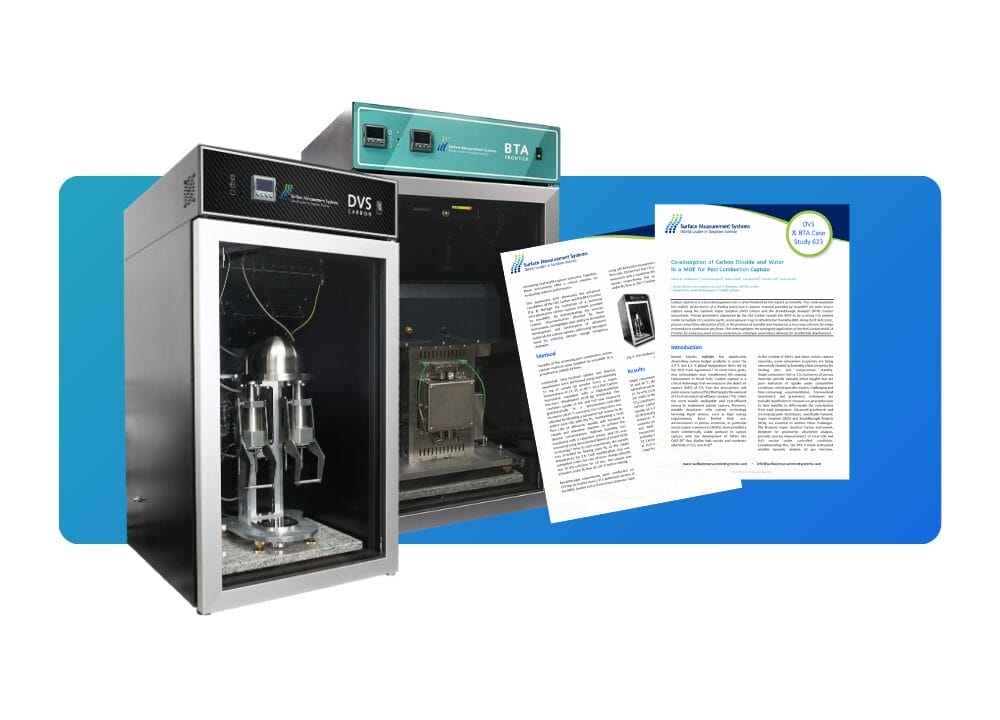
Using a promising MOF supplied by novoMOF, the study illustrates how DVS Carbon and BTA Frontier enable detailed assessment of carbon capture materials under mixed-gas conditions.
Inside the case study, you’ll learn:
|
|
Why DVS Carbon & BTA Frontier?
Understanding sorbent performance under humidity is essential but often experimentally complex and time-consuming.
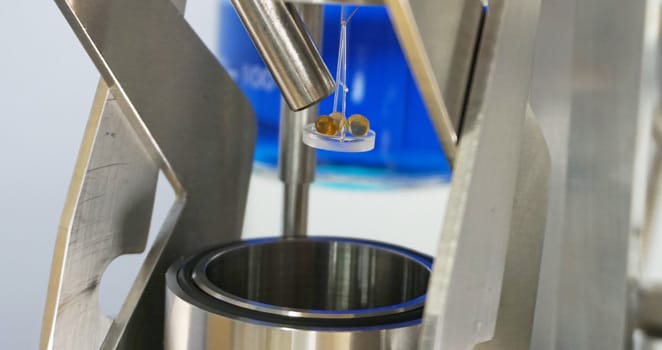
By integrating high-resolution gravimetric sorption analysis with dynamic breakthrough testing, DVS Carbon and BTA Frontier allow researchers to work with small sample quantities and control humidity and gas composition precisely. They also have the ability to quantify capacity, kinetics, stability, and regeneration behavior with confidence.
Together, they provide a comprehensive, process-relevant toolkit for evaluating advanced carbon capture materials.

Download the Case Study Now!
Download the full case study to see how co-adsorption testing under humid, mixed-gas conditions informs material selection and accelerates carbon capture development.

