High adsorption capacity does not necessarily translate into effective separation. In an industrial gas stream, an adsorbent must distinguish between several components while they compete for adsorption sites and move continuously through the material. Their relative affinities and transport kinetics determine which components are retained, which pass through, and how that behavior changes as the bed becomes progressively loaded. A multi-gas breakthrough analyzer measures how components within the gas mixture separate under continuous-flow conditions, offering a valuable way to assess sorbents for carbon capture, biogas upgrading, hydrogen purification, and other multicomponent separations.
What is a Multi-Gas Breakthrough Analyzer?
Fundamentally, a multi-gas breakthrough analyzer is a dynamic analytical instrument that passes a controlled mixture of gases or vapors through a column packed with an adsorbent. Adsorbent materials can include metal-organic frameworks (MOFs), zeolites, activated carbons, and other porous sorbents. Temperature, pressure, composition, and flow rate are controlled so researchers can investigate performance under defined experimental conditions.
During an experiment, components enter the packed bed simultaneously and interact with available adsorption sites according to their affinities and transport kinetics. Downstream detectors monitor the composition leaving the column and generate concentration-versus-time profiles known as breakthrough curves. Unlike static volumetric techniques, which are commonly used to characterize equilibrium adsorption, a breakthrough analyzer measures separation during continuous flow, capturing competition between components and the progression of adsorption through the bed.
Reasons For Selecting a Multi-Gas Breakthrough Analyzer
1. It Captures Competitive Adsorption and the Roll-Up Effect
Within a multicomponent stream, molecules compete for a finite population of adsorption sites. A sorbent showing high capacity for Carbon Dioxide (CO2) during a pure-gas experiment, for example, may perform differently when exposed to nitrogen (N2), methane (CH4), water vapor (H2O), or other competing species. Consequently, evaluating components individually can conceal interactions that determine practical separation performance.
Multi-gas experiments reveal displacement directly. A strongly adsorbed molecule may displace a more weakly retained component that occupied the bed earlier, temporarily raising the weaker component’s outlet concentration above its inlet concentration. Known as the roll-up effect, this behavior provides meaningful evidence about competitive affinity and adsorption kinetics. A breakthrough analyzer captures that transient response as it develops through the packed column.
2. It Evaluates Sorbent Performance Under Humid Conditions
Water vapor presents another important challenge as many industrial feeds contain moisture. Flue gas used in post-combustion carbon capture and raw biogas containing CO2 and CH4 are two industrial gas streams in which moisture may be present. Water can compete strongly for adsorption sites, alter selectivity, reduce accessible capacity, and affect the stability of moisture-sensitive porous materials.
Introducing controlled vapor alongside several gases allows researchers to examine performance at defined humidity conditions. With suitable dosing capabilities, a breakthrough analyzer can establish whether water changes CO2 retention, modifies breakthrough time, or interferes with removal of organic contaminants. Such measurements provide a closer representation of operating environments than dry single-component testing.
3. It Measures Dynamic Working Capacity
Equilibrium adsorption capacity describes how much adsorbate a material can retain under specified conditions once equilibrium has been reached. Process engineers, however, also need to know how much material can be captured before an unacceptable quantity appears downstream. That distinction makes dynamic working capacity particularly important when translating laboratory measurements into packed-bed designs.
Breakthrough curves identify when the target molecule reaches a specified outlet concentration and show how adsorption progresses through the column. Their shape also provides information about the mass transfer zone (MTZ), the region of the bed in which most of the concentration change occurs. By characterizing breakthrough time, dynamic capacity, and MTZ behavior, a breakthrough analyzer supplies parameters relevant to adsorbent utilization and bed sizing.
4. It Provides Experimental Separation and Selectivity Data
Predictive approaches like Ideal Adsorbed Solution Theory (IAST) estimate mixture adsorption from pure-component isotherms. These models are helpful for screening materials, although their assumptions may not represent competitive behavior in non-ideal systems, especially where adsorbate interactions, heterogeneous surfaces, kinetic effects, or water influence adsorption.
Direct multicomponent measurement offers an empirical comparison. Researchers can observe retention differences between gases during one controlled experiment and calculate dynamic separation factors from measured mixture behavior. As a result, a breakthrough analyzer complements equilibrium measurements and adsorption modelling with evidence generated under flowing conditions, ensuring researchers can assess if predicted selectivity translates into dynamic separation.
Key Features to Look for When Choosing an Analyzer
Selecting an instrument involves considering how closely its experimental capabilities match the intended process. For carbon capture, biogas purification, VOC removal, or hydrogen purification research, useful features include:
- Precise multi-component dosing using mass flow controllers, combined with controlled vapor generation for defined humidity and organic vapor concentrations
- Integrated downstream detection capable of monitoring several gases and vapors simultaneously, with interfaces for mass spectrometry when broader chemical identification is needed
- Flexible column and process controls covering relevant temperatures, pressures, sample quantities, and material geometries, including powders, pellets, extrudates, and monoliths
- Automated dead-volume determination to distinguish transport through system tubing and columns from adsorption-related retention
Careful control across dosing, detection, and packed-bed conditions makes a breakthrough analyzer more effective for comparing candidate sorbents under repeatable, application-specific conditions.
Dynamic Sorbent Testing With the BTA Frontier
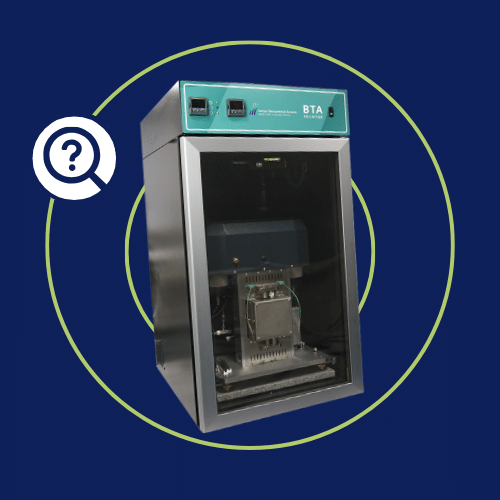
Surface Measurement Systems Ltd develops solutions for in-depth sorption and surface characterisation, including the BTA Frontier breakthrough analyzer for dynamic single-component and multicomponent gas and vapor studies. It combines an integrated sensor array for CO2, H2O, and VOC detection with a dual-column design enabling efficient sample activation and testing. Alongside this, flexible sample quantities from 30 mg to 3,000 mg support powders, pellets, and other material geometries across carbon capture, gas purification, and contaminant-removal research. Reach out to Surface Measurement Systems Ltd for more information on the BTA Frontier and to learn how advanced breakthrough analysis can support your next gas separation programme.