
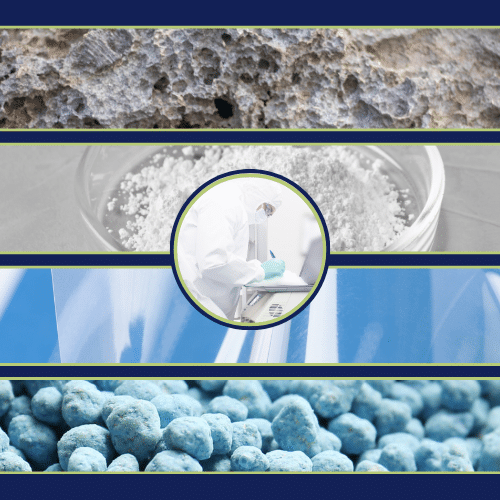
Formulators working with powders, granules, films, and porous solids require analytical data that explain how materials behave during processing, storage, and use. Bulk measurements alone may overlook surface interactions, moisture responses, or transport behaviour that influence caking, adhesion, phase stability, and shelf life. Materials characterisation techniques address these gaps by examining physicochemical properties that help scientists optimize formulations and support more reliable process scale-up.
Core materials characterisation techniques in modern formulation
Dynamic Vapor Sorption: quantifying moisture and solvent interactions
Dynamic Vapor Sorption (DVS) measures interactions between a sample and controlled concentrations of water or organic vapors. A highly sensitive microbalance records small changes in sample mass as relative humidity (RH) or vapor concentration changes. The resulting data show how much vapor a material adsorbs or desorbs and how quickly those processes occur.
Sorption isotherms can reveal hygroscopicity and hysteresis, which can provide evidence of hydrate formation, deliquescence, and moisture-induced physical changes. Such information is valuable when developing pharmaceutical powders exposed to humidity during manufacturing, agrochemical granules that may cake in storage, or amorphous ingredients susceptible to phase transitions.
Among materials characterisation techniques, DVS can help formulators:
- Compare moisture uptake across formulation candidates
- Optimize drying and storage conditions
- Study sorption and desorption kinetics
- Assess physical stability across defined RH conditions
Consequently, DVS provides a controlled way to relate laboratory measurements to environmental conditions encountered during manufacture, storage, and handling.
Inverse Gas Chromatography: examining surface energy and particle interactions
Inverse Gas Chromatography (iGC) examines the surface energetics and interactions of solid surfaces. In conventional gas chromatography, a known stationary phase separates components in a mixture. iGC reverses that arrangement: the powder, fibre, or particulate sample forms the stationary phase, and selected probe vapors pass through the packed column. Their retention behaviour reflects interactions with the material surface.
Surface energy is especially relevant to formulation because particles interact at their outermost interfaces. iGC can quantify dispersive, polar surface energy distributions, and Lewis acid-base characteristics, and provide information regarding energetic heterogeneity.
Formulation teams can apply these measurements to:
- Investigate cohesive and adhesive interactions linked to powder flow and caking
- Compare active pharmaceutical ingredients with potential excipients
- Assess binder compatibility in granulated formulations
- Identify surface differences between raw-material batches or following milling
Importantly, surface-specific materials characterisation techniques can expose variations that bulk measurements may overlook, helping scientists investigate the physicochemical origins of inconsistent processing behaviour.
Breakthrough Analysis: evaluating adsorption under continuous flow
Breakthrough Analysis (BTA) investigates dynamic adsorption when gases or vapors move continuously through a packed bed. During measurement, a defined mixture passes through an adsorbent, and changes in outlet concentration are monitored over time. The subsequent breakthrough profile provides information about dynamic adsorption capacity, competitive adsorption, breakthrough capacity, selectivity, and mass-transfer kinetics.
Competitive adsorption is a key consideration for porous materials operating in realistic gas streams, where water vapor or other components may compete with the target species for adsorption sites.
Researchers can use BTA to:
- Determine when an adsorbent bed approaches saturation
- Compare sorbent formulations for carbon dioxide capture
- Evaluate selective adsorption during industrial gas purification
- Examine humidity effects on volatile organic compound removal
Within the broader range of materials characterisation techniques, BTA connects adsorption properties with continuous-flow performance related to gas capture, purification, and separation processes.
Membrane Permeation Analysis: measuring barrier and transport behaviour
Membrane Permeation Analysis (MPA) focuses on the movement of gases and vapors through films, polymers, packaging materials, and functional membranes. Measurements quantify transmission under controlled temperature, humidity, and concentration gradients, providing insights about barrier performance efficiency and transport behaviour.
Water vapor transmission rate (WVTR), for example, can indicate how effectively packaging limits moisture ingress into humidity-sensitive pharmaceutical tablets or powdered formulations.
MPA measurements can support:
- Selection of packaging for moisture-sensitive pharmaceutical products
- Comparison of polymer films used as protective barriers
- Assessment of carbon dioxide separation membranes
- Evaluation of membranes developed for hydrogen purification or selective gas transport
Accordingly, MPA complements sorption analysis by examining movement through a material. For scientists choosing protective packaging or developing functional membranes, these materials characterisation techniques offer quantitative evidence for matching barrier properties with defined performance requirements.
Matching the materials characterisation technique to your formulation challenge
Deciding upon a measurement method is easier when the analytical question is clearly defined. Different materials characterisation techniques probe different aspects of material behaviour:
- DVS- suits humidity sensitivity, hydration states, drying behaviour, hygroscopicity, and storage-related caking
- iGC- characterizes surface energy and surface interaction properties suitable for powder flow, particle cohesion, coating adhesion, and active-excipient compatibility
- BTA- examines dynamic adsorption, competitive gas capture, sorbent loading, and purification performance under continuous flow
- MPA- quantifies gas and vapor transport through packaging films, polymer barriers, and selective membranes
Materials characterisation solutions for formulation research
Surface Measurement Systems Ltd has a portfolio of specialized instruments available that cover the aforementioned materials characterisation techniques. The DVS Resolution supports dual-vapor sorption analysis, the DVS Endeavour provides five-sample parallel gravimetric sorption analysis, and the DVS Discovery offers high-throughput gravimetric DVS measurements. For surface characterisation, the iGC-SEA measures surface energy properties, with the iGC-SEA Nova extending analysis to high-temperature conditions. Additionally, the BTA Frontier enables advanced dynamic sorption breakthrough studies, and the MPA Horizon measures gas permeation and membrane barrier performance.
Take your materials research further with Surface Measurement Systems Ltd. Reach out to our experts to discuss your materials characterization needs and identify which of our technologies would best fit your application.