
Online Workshop: Characterizing Construction Materials by Vapor Sorption Techniques

Characterizing construction and building materials? Watch this free online workshop to discover how you can maximize the accuracy and detail of your research using Vapor Sorption Techniques. Organized in partnership with the University of Applied Sciences in Wismar, this session is a vital resource for any working in the following fields of research:-Wood-Cement-Building Materials
Experimental Methods for Determining Carbon Dioxide Capture in the Presence of Water Vapor

In the real world, capture/adsorption of CO2 is often a competition with other gas-phase species, most commonly water vapor. In some cases, the concentration of H2O vapor is much higher than that of CO2 further complicating the adsorption process. This presentation, delivered by one of the world’s leading authorities in sorption science, Dr. Daryl Williams, […]
Online Workshop: Advanced Vapor Sorption Techniques to Characterize Pharmaceutical and Porous materials
Organized in partnership with University of Namur.
Capture of Hydrogen Sulphide and Sulphur Dioxide in MOFs
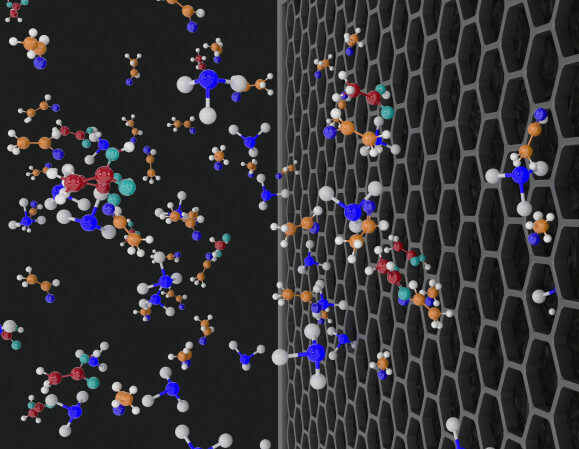
Abstract: Hydrogen sulphide (H2S) is a harmful chemical present in natural gas, biogas and emitted by different chemical industries, e.g., oil desulfurization process at oil refineries. H2S is considered as a major air pollutant due to its negative environmental impact, mainly associated with acid rain, and to high toxicity to humans leading to severe nervous […]
Water Sorption and Gas Adsorption Measurements on MOFs

This session will cover Metal Organic Frameworks (MOFs) that can be used in a range of adsorption applications, such as gas storage, carbon capture, separations, catalytic transformation, and drug delivery. In addition, they can be also used for thermochemical energy storage applications, whereby heating and cooling technologies use thermo-adsorptive effects. The combination of hierarchical pore […]
Challenges on specific surface area analysis of cellulosic materials

The interaction of a solid with its surroundings is through the available surface area for adsorption of gas or vapour molecules. This also allows probing of materials surface including irregularities and pores. One of the most successful methods is based on the BET method for gas adsorption onto a solid surface. The adsorption method of […]
Understanding Isotherm Shape and Isotherm Modelling from DVS Experiments
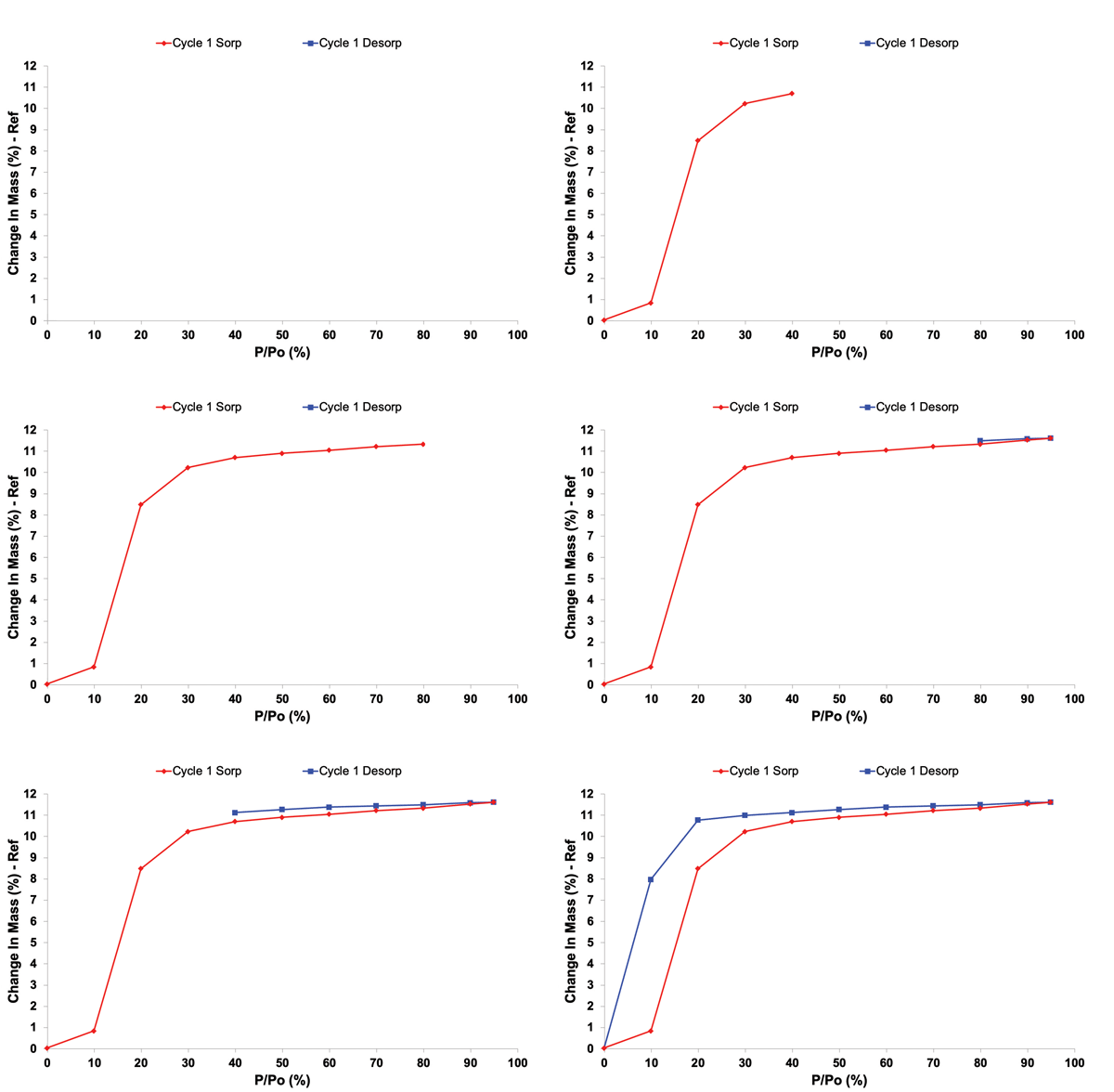
Dynamic Vapor Sorption (DVS) instruments are commonly used to measure sorption isotherms on a diverse array of materials, including powders, fibers, films, particulates, and other solid surfaces. These isotherms can be obtained with various gases and vapors over a wide range of temperatures. Isotherm size, shape and hysteresis can elucidate mechanistic information about vapor/gas-solid interactions. […]
CO2 Sorption & Diffusion under Humid Conditions: Competitive Adsorption Under Real World Conditions

In the real world, capture/adsorption of CO2 is often a competition with other gas phase species, most commonly water vapour. In some cases, the concentration of H20 vapor is much higher than that of CO2 further complicating the adsorption process. This presentation compares the use of two of the most commonly used experimental approach for […]
The Importance of Moisture in Pharmaceuticals and Food Materials by Surface Energy
Sorption techniques have been used to study the state of water molecules and their role in physicochemical stability of pharmaceutical and food materials. The sorption data has been used to measure the surface area and activation energy of diffusion for as received and modified pharmaceutical ingredients. Change in the temperature significantly influences the amount of […]
Determination of Specific Surface Area and Surface Energy analysis using iGC

The webinar presented the theory and calculation process of the BET Specific Surface Area (SSA) and Surface Energy (SE) analysis using inverse Gas Chromatography (iGC) and the comparison with other techniques. Inverse Gas Chromatography can be used to measure both infinite and finite dilution experiments depending on the requirement of the application. BET SSA analysis […]
Comparative single solvent & multi-solvent sorption studies using DVS & Raman spectroscopy
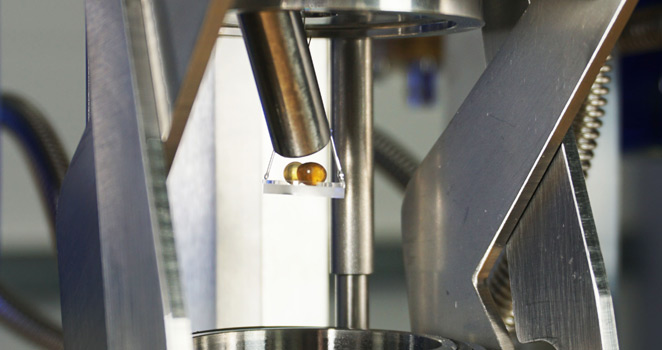
Moisture has a large impact on the mechanical, physical and chemical properties of many materials. Organic solvent sorption studies can be particularly useful for understanding the surface and bulk properties of different materials, such as BET surface area, porosity, diffusion and permeability. This webinar will highlight a series of experimental methods of water and organic […]
Study of particle cohesion/adhesion and wettability of powders and formulations
Presented by Prof. Daryl Williams from Imperial College London, this educational and informative webinar discussed the study of the role of solid state surface chemistry on the high shear granulation performance of model pharmaceutical solids.
Determination of Low BET Surface Area using Vapor Sorption Techniques

The interaction of a solid with its surroundings is through the available surface area for adsorption of gas or vapor molecules. This also allows probing of material surface including irregularities and pores. One of the most successful methods is based on the adsorption method of Brunauer, Emmett and Teller (BET), which is based on the […]
Interactions in reinforced composites as obtained through inverse gas chromatography (iGC)
In this informative and educational webinar, Dr. Anett Kondor will compare dispersive and acid-base contributions to adhesion in man-made cellulose fibre-reinforced thermoset composites, various nanofiller- polyurethane (thermoplastic) composites, and surface modified silk particles. These interactions are measured by iGC. Dr. Anett Kondor is the iGC-SEA Product Manager and Product Specialist of Surface Measurement Systems and […]
Advanced Characterization on Solid State Materials | Dr. Damiano Cattaneo – Part 3/3
In this webinar, Dr. Damiano Cattaneo focused on:
Advanced Characterization on Solid State Materials | Prof Williams Imperial College – Part 2/3

In this webinar, Professor Daryl Williams discussed that in many of the particle processing operations, the surface energy and the surface area of the starting, intermediate or final products is a key factor in understanding the processing operation and or the final product performance. Inverse Gas Chromatography played a major role on this.
Advanced Characterization on Solid State Materials | Dr. Juergen Thun (Roche) – Part 1/3

n this webinar, Dr. Jürgen Thun highlighted the importance of Dynamic Vapor Sorption in developing a sound solid form control strategy. Speaker: Dr. Jürgen Thun Principal Scientist, Group Leader Particle Design F. Hoffmann-La Roche Ltd., Pharma Technical Development Synthetic Molecules Solid State Science
Determining the Tg for Polymers and Polymeric Surface Coatings using iGC
Inverse Gas Chromatography (iGC) can be used to determine the surface properties of many materials. In some cases, as well as surface adsorption, there is also bulk sorption of the iGC probe molecules, allowing bulk materials properties to also be determined. Presented by Prof. Daryl Williams, the webinar presented the use of iGC technique for […]
Adsorption of volatile organic compounds by industrial porous materials: Impact of relative humidity

In this webinar, Prof. Williams explained the importance of process humidity as a key parameter when designing or selecting adsorbents in realistic process conditions. Additionally, the methods used in this study provide a simple and reproducible way of testing porous materials for applications requiring or involving high levels of relative humidity.
Dynamic Vapor Sorption (DVS) Applications for Amorphous Content Calculations & in situ Raman studies
In this webinar, Dr. Damiano Cattaneo highlighted some examples of case studies such as amorphous content calculation and glass transition Tg RH (the critical relative humidity at the specific glass transition temperature). Moreover, we will focus on the characterization of an in situ study of the camera and Raman applications during a DVS experiment.
Surface Characterization of Cellulose and Natural Fibers by iGC-SEA

Presented by Dr. Daniel J. Burnett, this educational and informational webinar focused on the use of Inverse Gas Chromatography (iGC) to study the surface properties of cellulose, nano-cellulose, and other natural materials. In particular, practical examples and case studies will be given that cover a wide range of relevant problems including surface energetics, wetting behavior, […]
The Isosteric Heat of Adsorption and Competitive Co adsorption of H₂O with CO₂ on Zeolites
In this webinar, Dr. Vladimir Martis highlighted Gravimetric Dynamic Vacuum Vapor Sorption Analyzer (DVS Vacuum) that is employed to measure water adsorption/desorption isotherms in a broad temperature range to calculate the isosteric heat of adsorption as well as competitive co-adsorption of CO2 with H2O. Since joining Surface Measurement Systems in 2013, Dr. Vladimir Martis has […]
Impact of Freeze Drying Conditions on Stability of Food and Pharmaceutical Materials
In this webinar, we showed the study conducted on moisture-induced phase transitions for several co-lyophilized protein-sugar mixtures that have been investigated over a wide humidity range. Presented by Meishan Guo, Application Engineer and joined by Dr. Majid Naderi, Associate Director of Science Application and Brad McGroarty, Digital Marketing Associate at Surface Measurement Systems.
Surface Energy Heterogeneity for Coating & Adhesion Applications – the IGC Technique
Presented by Dr. Daniel J. Burnett, this educational and informational webinar will focus on the use of Inverse Gas Chromatography (IGC) for coatings and adhesion applications. In particular, practical examples and case studies will be given that cover a wide range of relevant problems including: surface energetics, wetting behavior, composite adhesion/cohesion phenomena and surface modification.
Measuring co-diffusion kinetics on thin films & asphaltic components using DVS
Presented by by Dr. Majid Naderi. Dynamic Vapour Sorption (DVS) was used to study the vapour diffusivity and vapour capacity at equilibrium of thin films and bitumen materials. Moisture and methanol permeation rates were determined over a range of humidity and temperatures. These parameters are essential for modelling moisture diffusion in a wide range of […]
Advanced vapor sorption applications for pharmaceutical materials: Utilization of co-adsorption isotherms and Raman Spectroscopy
Watch this webinar now on the utilization of adsorption isotherms and Raman Spectroscopy in the characterization of pharmaceutical materials. This webinar is delivered by a leading authority in sorption science, Dr. Daniel J Burnett.
iGC Symposium 2016: iGC in characterizing abrasive particles & composite materials
For the iGC Symposium 2016, Dr. Beata Strzemiecka of Poznan University of Technology in Poland talks about her works and experience in using iGC for characterizing abrasive particles and composite materials
iGC Symposium 2016: Using iGC for determining Hansen Solubility Parameters
As part of the iGC Symposium 2016, Dr. Adam Voekel of Poznan University of Technology delivered talk about determination of Hansen Solubility Parameters by means of Inverse Gas Chromatography (iGC).
Inverse Gas Chromatography for Materials Characterisation
Join Dr Majid Naderi as he discusses different case studies on Inverse Gas Chromatography (iGC) method. And learn the importance of determining surface energy in characterizing materials such as powder, films, fibers, polymers, nanomaterials.
Particle Engineering in Pharmaceutical Solids Processing
This webinar, presented by Prof. Daryl Williams from Imperial College London, reviews the surface energy and surface energy heterogeneity of crystalline solids, methods for the measurement of surface energy, effects of milling on powder surface energy, adhesion and cohesion on powder mixtures, crystal habits and surface energy, surface energy, and powder granulation processes.
Dynamic Vapor Sorption (DVS) for Materials Characterization
Dr Majid Naderi discussed Dynamic Vapor Sorption technique and its applications and case studies on pharmaceutical, personal care, packaging, food and building materials as well as its advantage over other methods for measuring moisture content.
Surface Characterization of Nanomaterials by IGC

Dr. Dan Burnett outlines several studies where iGC has been used to characterize the surface energy, wetting behavior, and adhesion/cohesion properties of various nano materials.